


Bhutan Bird Watching Tour 14 Days
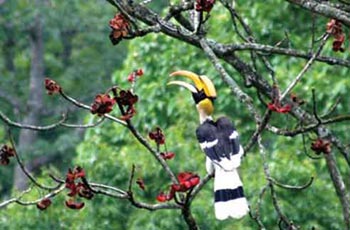 Bhutan is considered as a bird-watchers' paradise. Over 70% of the country is forested, and unlike other Himalayan countries which are seen to be suffering from deforestation and environmental degradation, Bhutan’s richly preserved forest and a significant proportion of its land designated as protected areas, supports some of the best reaining representatyives of forest habitats in the Himalayas. The black mountan ranges of the eastern Himalayas of which Bhutan is a part has been designated as one of the world's top 10 biodiversity "hotspots" supporting an array of climatic conditions and layering of distinct biotic communities.
Currently 675 species have been recorded in the country including ten species of birds that are in danger of extinction reside in Bhutan, including the rare black-necked crane, and the Imperial Heron, which is one of the fifty rarest birds in the world. The best season for birdwatching in Bhutan is usually the winter months of late September to Feburary.
Bhutan is considered as a bird-watchers' paradise. Over 70% of the country is forested, and unlike other Himalayan countries which are seen to be suffering from deforestation and environmental degradation, Bhutan’s richly preserved forest and a significant proportion of its land designated as protected areas, supports some of the best reaining representatyives of forest habitats in the Himalayas. The black mountan ranges of the eastern Himalayas of which Bhutan is a part has been designated as one of the world's top 10 biodiversity "hotspots" supporting an array of climatic conditions and layering of distinct biotic communities.
Currently 675 species have been recorded in the country including ten species of birds that are in danger of extinction reside in Bhutan, including the rare black-necked crane, and the Imperial Heron, which is one of the fifty rarest birds in the world. The best season for birdwatching in Bhutan is usually the winter months of late September to Feburary.
- Itinerary
- Cost Info
- Departure
Bhutan Bird Watching Tour Itinerary
Day 1: ARRIVE PARO
During the journey, the traveler will experience from the plane a spectacular view of Mt. Everest, and other famous Himalayan Mountains including the sacred Mt. Jhomolhari the second highest peak in Bhutan. On arrival at Paro International Airport you will be received by your Bhutanese friend fromMakalu Adventure. Lunch at the Hotel. Discuss the Tour Programme with the Tour Guide and afternoon visit the Paro Valley which is relatively dry. Blue pines grow on the slopes, but most of the valley floor is cultivated with rice paddies, which are utilized for wheat during winter time. Many finches feed on wheat grains. The main attraction is the Pachu riverbed north of the town. You will spot some Ibis bills, Common Kingfisher, Crested Kingfisher and some accentors among the rocks and bushes. Then visit the forests near the ruins of Drukgyal Dzong.
Overnight hotel in Paro.
Day 2: PARO – THIMPHU
After breakfast hike to Taktsang (Tiger's Nest) Monastery, which is Bhutan's most famous monastery. Guru Rinpoche is said to have flown on the back of a tigress from Singye Dzong in Lhuntse to meditate in a cave where Taktsang Monastery now stands. It is perched on the edge of a steep cliff, about 900 meters above Paro Valley. The trail is along the pine forests and you will come across some birds on the wat to the monastery. The hike to reach the viewpoint to the monastery makes for a nice half-day excursion. In the afternoon you will drive to Thimphu. In the evening you can explore Thimphu, the capital of Bhutan, and absorb the lifestyle of the people. You can also visit some interesting handicraft shops.
Overnight: Hotel in Thimphu.
Day 3: THIMPHU – SIGHT SEEING
Very few birds are seen in Thimphu, and the interesting birding sites are found around Begana and Cheri villages. You will walk up to Tango Monastery (2700 meters). The vegetation around here includes upper and lower temperate broadleaf evergreen; coniferous forests, riversides, subalpine and shrubberies. Spotted Laughingthrush could be seen here mainly in spring. Tango is good for general birding, and Mountain Eagles and Snow Pigeons are common here. Several wallcreepers will be seen enroute between Begana and Thimphu. Evening will be spent in visiting the Babesa Sewerage Pond. Since the construction of the sewerage pond, the site has become the sanctuary for the birds. You will see some species of ducks feeding in the pond.
Overnight: Hotel in Thimphu.
Day 4: THIMPHU – PUNAKHA
After breakfast you will drive to Punakha, with a stop en route for tea at Dochu La (3,100 meters), where on a clear day you can get spectacular views of the Himalayas. From the Docula pass walk along the traditional route down to the Laborer’s camp. You might spot Rufous bellied Bush-Robin, Golden-naped Finch, Hoary Barwing, and Edwards Rosefinch. Continue driving to Punakha, the former capital of Bhutan, and visit Punakha Dzong, which is noteworthy both for being one of the most beautiful dzongs in Bhutan and also for having been built by the first Shabdrung in 1637.
Overnight at hotel in Punakha.
Day 5: PUNAKHA – BIRDING – SIGHT SEEING
Full day birding in Punakha region. The best area for birding is between 1300 and 1600 meters along the Mochu River in Jigme Dorji Wangchuk Wildlife Sanctuary. The forest is relatively undisturbed, but people collect firewood and cattles can be seen along the road. Further downstream it is possible to view the rocky riverbeds from a hanging bridge, in order to check for the near extinct White-bellied Heron. Mr Inskipp saw the heron in 1994 along this river. A few common birds, which will be seen between the riversides and farmlands from Lobesa to Tashithang includes White-tailed Eagle, Crested Serpent-Eagle, Golden Eagle, Mountain Eagle, Striated Laughingthrush, Golden Bush-Robin, and Tibet Serin.
Overnight hotel in Punakha.
Day 6: PUNAKHA – GANGTEY
This is a very scenic section of the road as it leads through bamboo and rhododendron conifer forests, meadows and river valleys. You will visit Wangdi Phodrang enroute, which is at 1400 meters, and you would probably Red-billed Leiothrix together with a flock of Black-eared Shrike-babblers. On arrival at Gangtey, which is at 2400 meters you might see Hill Partridge, Dark-breasted Rosefinches in the bamboo thickets. Check into the hotel.
Overnight: Guest House in Gangtey Valley.
Day 7: GANGTEY – TRONGSA
Early morning see the Black Necked Cranes and also the trail and the roosting areas. Also visit the RSPN (Royal Society of Protection of Nature) Education Center. After lunch drive to Trongsa across Pelela Pass (3300 meters). The highlights of the routes can be a White-browed Bush Robin, Brown Parrotbills, , Streaked Laughingthrushes, Stripe-throated Scimitar-babblers. You will also see birds on the roadside to Trongsa. On arrival check into the hotel.
Overnight: Hotel in Trongsa.
Day 8: TRONGSA – LANGTHEL
Trongsa is a warm and sunny valley has been cultivated for a long time, and it is worthwhile to visit some of the cultural sites, such as Tongsa Dzong, rather than going birding all day. However in the morning, it is possible to watch a pair of the Yellow-rumped Honeyguide at nest near the second baileys bridge at 1800 meters 18 km south of Tongsa. You will also see Peregrine Falcon hunting domestic rock doves near the dzong and on other roof tops. After lunch drive to Langthel birding along the way.
Overnight: Camp at Langthel.
Day 9: LANGTHEL – BUMTHANG
Half day birding in Langthel. Afternoon drive to Bumthang birding along the way. The Yotungla Pass (3400 meters) is one of the best places for birding. The habitat at Yotungla Pass consists of Hemlock and Blue Pines with dense impenetrable dwarf bamboo thickets. Large flocks of Black-throated and Red-throated Thrushes together with a few White-winged Grosbeaks could be seen. You might also see Blood Pheasants, White-throated Redstarts, Giant Parrotbills and Chestnut-vented, Coral and Gray-bellied Tits. The next spot is the Gatsa Valley (2800 meters). The boggy meadow at Gatsa is one of the 3 sites for the wintering Black-necked Cranes. If you are lucky you might spot some Black necked cranes. Check into hotel on arrival in Bumthang.
Overnight: Guest house at Bumthang.
Day 10: BUMTHANG – LINGMETHANG
Early morning you watch birds in Bumthang (2600 meters). The shrubs and trees in the riverbed are good for birding. You might locate Beautiful Rosefinches, Brown Parrotbills, Little Buntings and Black-throated Thrushes at the river. After breakfast drive to Lingmethang. On the way you will do birding at Trumshingla Pass (3800 meters). From Thrumshingla Pass you will drive down to Lingmithang. The habitat changes from conifers to subtropical forest as it covers an altitudinal variation from 3800 meters to 750 meters. The broadleaf evergreen forest commences at 2600 meters, and the cliffs drop vertically into the subtropical valley more than 600 meters below the road. Most of the birds are seen from the road between 2600 and 1500 meters. Some of the highlights from this area were Satyr Tragopan, Crimson-breasted Woodpecker, Darjeeling Woodpecker, Long-billed Thrush, Blue-winged Laughingthush, Golden-breasted. A good birding site is found near town at 750 meters from which a bridge crosses the river. Most of the species are generally found in dry subtropical ravine forests and near the rice paddies. The highlights of Lingmithang are Basra, Ashy Bulbul, Sultan Tit, Blue-throated and Golden-throated Barbet, Gray-headed Woodpecker, Kalij Pheasant, Rufous-cheeked Scimitar-babbler, Gray-sided Bushwarbler, and Little Niltava, Yellow throated Fulvetta, Red-headed Parrotbill and Crimson Finch. You will camp near the river side.
Overnight: Camp.
Day 11: LINGMETHANG – BUMTHANG
The habitat in Lingmithang area is fragmented and at best mainly scrubby below 1500 meters. Because of the cold weather, very few birds could be observed during most days. Drive back to Bumthang.
Overnight hotel in Bumthang.
Day 12: BUMTHANG – WANGDUE PHODRANG
Drive back to Wangdiphodrang. On arrival check in to the hotel.
Overnight: Hotel in Wangdiphodrang.
Day 13: WANDUE PHODRANG – PARO
In the morning you will drive back to Paro across Dochu La pass. You will stop in Thimphu for lunch. After lunch, you will drive to Paro. On arrival check into the hotel. Evening stroll freely in the town. You can also visit the farm house to absorb the lifestyle of rural people. If you wish you can also have traditional Bhutanese dinner. S
Over night: Hotel in Paro.
Day 14: PARO – PARO INTERNATIONALS AIRPORT for departure
Early morning drive to Paro International Airport and your Bhutanese friends fromMakalu Adventure will accompany you to bid farewell as you embark on your onward journey to back home